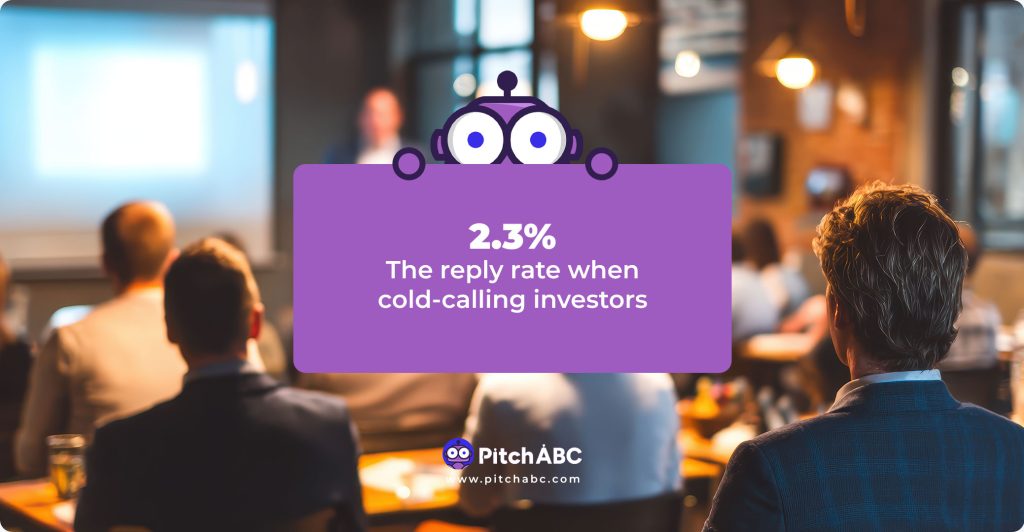
Finding investors for a startup in 2025 starts long before you send a deck. Most venture deals—an estimated 82 %—originate from warm introductions that travel through a founder’s existing network. Cold approaches can still work, but the math is sobering. The average cold‑email reply rate hovers at 8.5 %, while a recent sales‑intelligence study pegs cold‑calling success at just 2.3 %. In other words, a founder who relies on “spray‑and‑pray” outreach must contact dozens—sometimes hundreds—of investors to book a single meeting.
These numbers frame the central question this article answers: Where should early‑stage founders focus their limited time if they want to secure capital? We will examine how company maturity affects investor interest, compare the real hit rates of cold calls, cold emails, and referral-based introductions, and weigh the true cost‑benefit of accelerators in an era when acceptance rates have slipped below one percent at the top programs. Along the way, we will outline practical tactics to boost your odds at each step, from tightening readiness metrics to crafting referral requests that actually convert.
By the end, you will know which channels deserve priority, how to benchmark your startup’s readiness, and when an accelerator or incubator is worth the dilution. Put simply, you will leave with a data‑backed roadmap to find investors for your startup—without wasting cycles on channels that rarely pay off.
1. Check that the company is mature enough
Data from Carta and Antler shows it takes most software founders one‑to‑three years from launch to close a priced seed round. During that “hidden” stretch the average accelerator applicant is already 3.1 years old and doing about $114 K in trailing revenue—evidence that investors expect some traction before they engage.
Take‑away: before searching for money, tighten your metrics and narrative; PitchABC’s readiness audit was built for this step.
2. Use warm introductions first
Warm relationships still dominate deal flow. A 2025 Founders Forum study found 82 % of VC investments begin with a warm intro rather than a cold pitch. Earlier research showed that an introduction can make funding 13 times more likely than a cold email. Start by mapping second‑degree links—past managers, angel backers, portfolio founders, even satisfied customers—and ask for double‑opt‑in referrals. The social proof travels with you into the first meeting.
3. Understand what “cold” really means
If you must reach out cold, know the odds. Industry benchmarks peg the average cold‑email reply at 8.5 % and cold‑call conversion near 2 %. Response rates that low are not a verdict on your idea; they reflect sheer inbox noise. Personalize each note, reference a partner’s recent deal, and attach a one‑page teaser that passes the three‑minute skim test. Even then, cold outreach works best as a follow‑up channel after social engagement—commenting on a partner’s post or sliding a concise update into their newsletter reply field.
4. Are accelerators worth the equity?
The numbers suggest they can be—if you win a slot. Techstars reports that 74 % of its graduates raise follow‑on capital within three years. Y Combinator alumni hit a 39 % Series A rate and have produced more than 100 unicorns, but accept <1 % of applicants. Acceptance may cost 5‑7 % equity plus a time‑boxed commitment, yet the trade‑off is curated investor days and a network that short‑circuits the warm‑intro hurdle. For very early teams the dilution is often cheaper than months of self‑funded runway and low‑probability outreach.
5. Build a blended strategy
Begin filling your funnel 90 days before you plan to raise. Log every warm introduction, cold email, and accelerator deadline in one tracker. Cross‑reference each investor’s thesis against your metrics so you only send high‑match pitches. As meetings appear, keep updating your data room; modern VCs run automated checks before partner calls.
6. Close the gap with evidence
Investors care about speed and efficiency—growth that does not burn indiscriminately. Show month‑over‑month revenue, churn, and burn‑multiple in one slide, then price the round against current seed medians. A data‑rich story that aligns with their return horizon diffuses the valuation‑versus‑revenue debate and turns the dialogue toward timing, not conviction.